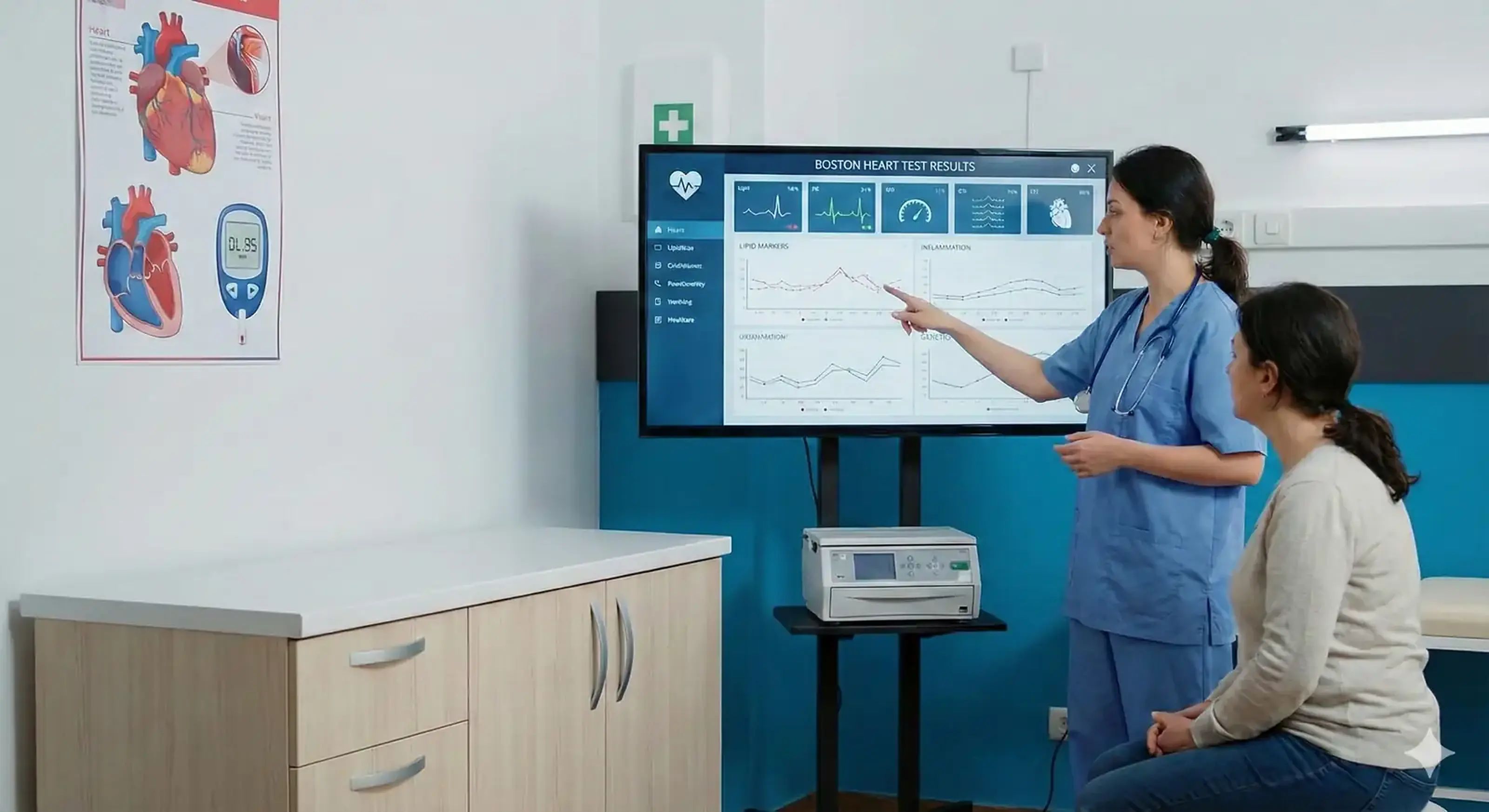
What advanced cardiometabolic testing measures
A routine lipid panel reports how much cholesterol is being carried. It does not report how many particles are carrying it, how inflamed the arterial wall is, or how hard your pancreas is working to keep glucose normal. Two people with identical LDL-C can therefore sit at very different risk.
Advanced testing addresses that gap. Depending on your history it may include ApoB, lipoprotein(a), LDL and HDL particle number and size, remnant cholesterol, hs-CRP, fasting insulin with HOMA-IR, HbA1c, uric acid, homocysteine, and liver and kidney markers. Together these describe the process that leads to cardiovascular and metabolic disease years before a conventional threshold is crossed.
How it works, step by step
- 01Consultation: personal and family history, blood pressure, body composition, medications and current risk.
- 02Panel selection: markers chosen to answer a specific question about your risk, not a fixed bundle.
- 03Fasting draw: done at the clinic or at a laboratory near you.
- 04Risk interpretation: results combined with your history into a picture of trajectory, not a snapshot.
- 05Plan and retest: nutrition, training, sleep, and medication where indicated, with a defined date to measure whether it worked.
Who it’s for, and who it isn’t
Likely a good fit: adults with a family history of early heart disease or type 2 diabetes, anyone with borderline glucose, lipids or blood pressure, patients whose weight or waist has changed despite consistent effort, and high performers who want risk measured properly rather than assumed away.
Likely not a fit: anyone with current chest pain, breathlessness on exertion or other acute cardiac symptoms. That calls for an urgent cardiology evaluation, not an advanced panel. If you are having chest pain now, call 911.
What to expect at your first visit
The first appointment is a risk consultation. We review your history, measure blood pressure and body composition, and decide which markers would change your plan. After the draw, results are reviewed with you in a dedicated appointment where we set explicit targets and a timeline for re-measuring them.
What the numbers can and cannot tell you
Advanced markers describe risk more precisely; they do not visualize your arteries. Where the picture warrants it, we will recommend imaging such as a coronary artery calcium score and coordinate with a cardiologist rather than treating a number in isolation.
We also avoid over-treating. Some markers are strongly tied to outcomes and worth acting on; others are informative but not yet a target in their own right. We will tell you which category each of your results falls into.
Pricing and insurance
Organic Well does not participate with insurance plans. Panel and consultation costs are disclosed before anything is ordered, and superbills are provided for potential out-of-network reimbursement.
Cardiometabolic testing in Coconut Grove, Miami
Testing and review appointments take place at 3661 S. Miami Ave, Suite 1003, serving Brickell, Coral Gables, South Miami and Key Biscayne, with lab draws arranged locally and reviews by secure video for patients elsewhere in Florida.